Lesson #68: Tense Review and Happy Diwali!
Today is the first day of the Hindu Festival Diwali दीवाली, so firstly I wanted to wish everyone single of the my readers and very happy and wonderful Diwali! Diwali is sometimes known as Deepavali दीपावली and translates to ‘The Festival of Lights’.
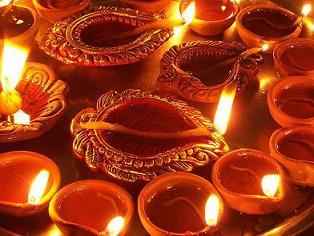
Diya (oil lamps) are often lit for Diwali.
Diwali is one of the biggest events in the Hindu calender and is celebrated with plenty of fireworks and candles. You can read more about Diwali and learn all about it’s religious and cultural significance on BBC Religions here or on DiwaliFestival.org here.
Ready for today’s lesson? Today we’re simply going to review over some of the information about tenses and verbs that we’ve learnt so far. This is to remind us of what we have learnt and to prepare ourselves so we can learn about the Past Tense in Hindi (which I do admit, can get a little complicated). This should be great revision for everyone and should help you find some of the lessons that you missed or need more practice with!
We began in Lesson #25 where we learnt that verbs are 'doing’ words, we saw a few examples of Hindi verbs and we learnt that the root of a verb is it’s infinitive form minus the ना naa at the end, ie the root of खाना khaanaa - to eat is खा khaa.
Then we used this information to create Present Tense sentences in Hindi in Lesson #28. We do this by adding ता taa, ते te or ती tee to the verb root depending on wether the subject is masculine or feminine, we also add the correct form of होना honaa, as learnt in Lesson #22, to the end. For example;
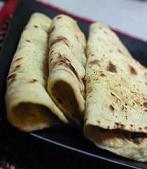
मैं रोटी खाता हूँ main rotee khaataa hoon - I eat the Roti (said by a male) and मैं रोटी खाती हूँ main rotee khaatee hoon - I eat the Roti (said by a female).
Then we learnt about the Present Continuous Tense in Lesson #35, this is equivalent to the ’-ing’ in English. We saw that we simply add रहा rahaa, रहे rahe or रही rahee to the verb root. For example using the verb पढ़ना parhnaa - to read;

मैं किताब पढ़ रहा हूँ main kitaab parh rahaa hoon - I am reading the book (said by a male) and मैं किताब पढ़ रही हूँ main kitaab parh rahee hoon - I am reading the book (said by a female).
And then finally we saw the Future tense in Lesson #53. This is a bit more complicated than the other tenses, but it’s nothing too difficult! In English this is the same as 'I will…’ or 'She will…’ etc. For example using the verb लिखना likhnaa - to write;

मैं कहानी लिखूँगा main kahaanee likhoongaa - I will write a story (said by a male) and मैं कहानी लिखूँगी main kahaanee likhoongee - I will write a story (said by a female).
How was that? Was is just revision or did you see things you didn’t know? If there’s things that you are unsure of then revise over the lessons whenever you have a chance! In the next few lessons we’re going to begin to learn about the Past Tense in Hindi!
There are of course many other things we’ve learnt about verbs and grammar in Hindi and you can find everything in the Beginners Grammar Section.


