Lesson #63: Using पसंद pasand to describe Likes and Dislikes
Whenever you are having a conversation in Hindi one thing you’re always going to be saying are sentances of the form ‘I like this’ or 'someone doesn’t like that’. Today we’re going to learn how to create these!
The key word we’ll be using is पसंद pasand - which translates to English as 'like’ (or sometimes 'pleasing’). So how do we use it? Well, let me show you a simple example first;

मुझको हिन्दी पसंद है
mujhko hindee pasand hai
- I like Hindi
But, you might be thinking, isn’t the word for I in Hindi मैं main ? Yes this is true, but when using पसंद pasand we put the pronoun in the oblique case (Remember we learnt how to do this in Lesson #61) because it is followed by the postposition को ko meaning 'to’. So this sentence above literally translates as; 'to me hindi pleasing is’.
Let’s see some more examples;
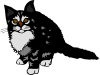
अनिता को बिल्लियाँ पसंद हैं
anitaa ko billiyaan pasand hain
- Anita likes Cats.
Notice how we use the plural हैं hain here, this is because when using पसंद pasand the verb agrees with the object of the sentence and not the subject. In this case the object is 'cats’ so we use the plural हैं hain.

क्या उसको बतख पसंद हैं?
kyaa usko batakh pasand hain?
- Does she likes Ducks?
हाँ, उसको पसंद है
haan usko pasand hai
- Yes, she does.

हमको भारत बहुत पसंद है
hamko bhaarat bahut pasand hai
- We like India very much (or We love India).
To turn this into the negative, ie to show dislikes, you simply put नहीं naheen before the है hai or हैं hain. For example;

अनु को पढ़ना पसंद नहीं है
anu ko parhnaa pasand naheen hai
- Anu doesn’t like to study.

मुझको गाना पसंद नहीं है
mujhko gaanaa pasand naheen hai
- I don’t like to sing.
Hopefully you now know and understand how to compose sentences showing likes and dislikes. Remember, the pronoun (or subject) goes into the Oblique case, it is followed by the postposition को ko and the verb agrees with the object.
Practice these sentences by creating writing a small paragraph talking about your own likes and dislikes and some of your friend’s likes and dislikes.


